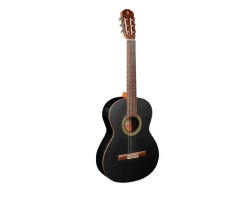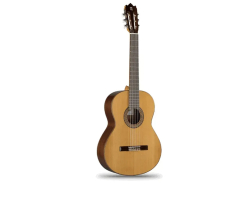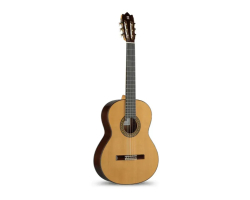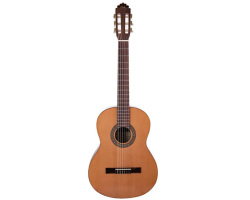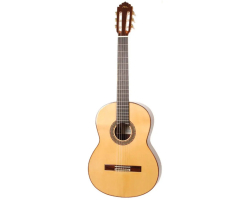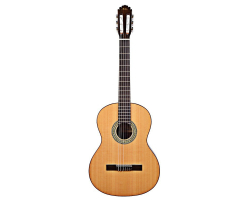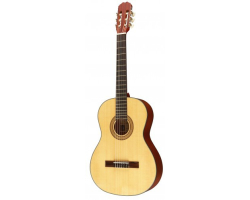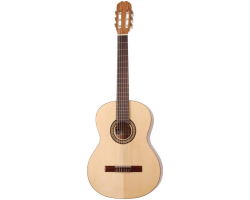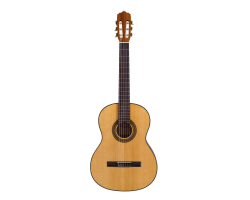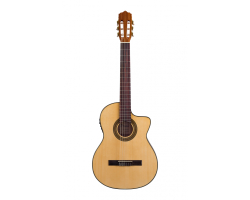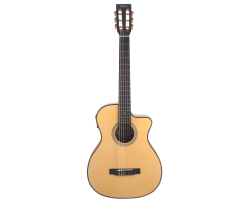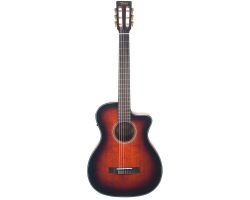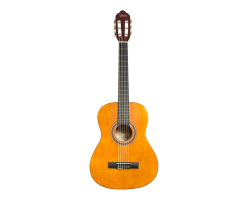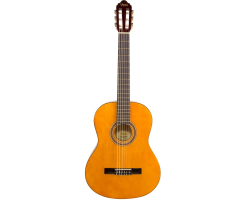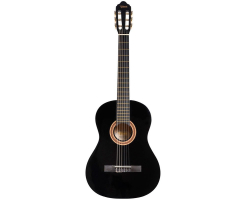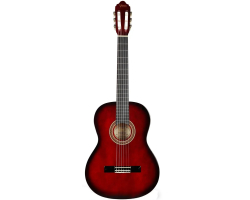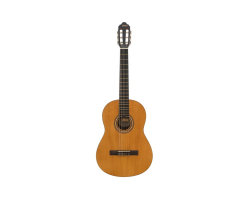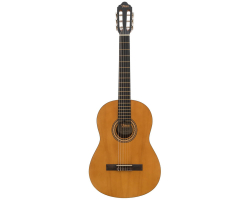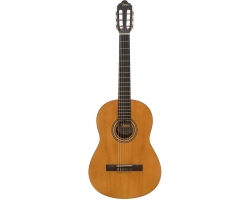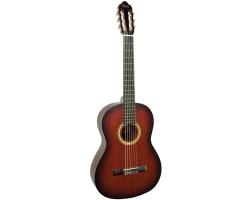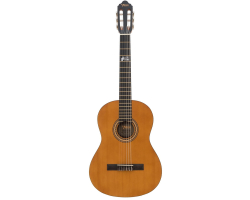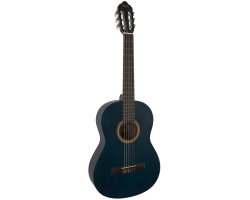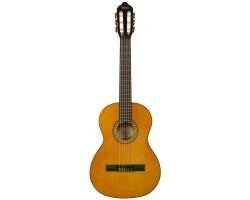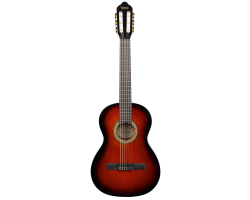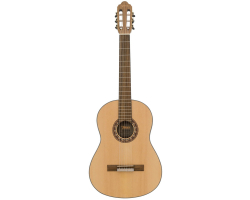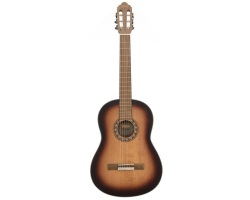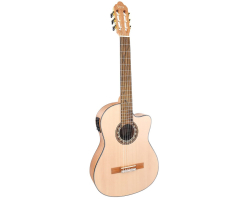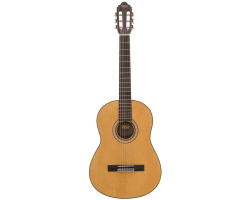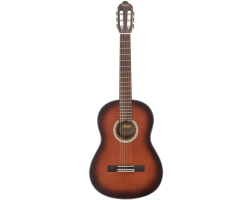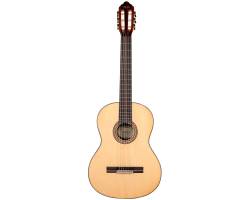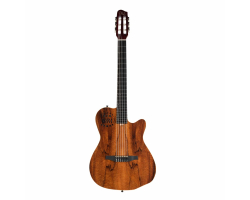
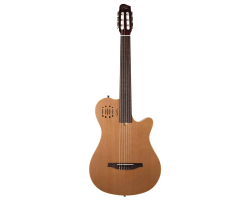

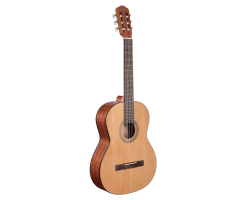
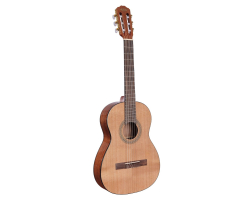
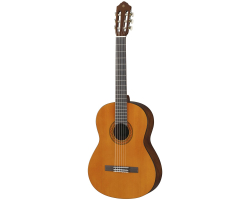
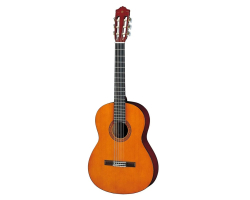


A classical 6-string guitar is recommended for any guitarist because it is an instrument with a wide range of possibilities. Some use it for their first lessons, while others for concert activities. The classical 6-string guitar is in demand in academic, folk, and chamber music. The instrument is organic both in ensembles and in solo performances, in accompaniment and melodic lines.
If you are taking your first steps in guitar music, the classical six-string guitar is the best instrument to help you with this. Let's consider its advantages for beginners:
Nylon strings. They are soft and do not hurt your fingers. This provides greater opportunities for the rapid development of left-hand technique.
Construction. The guitar is designed so that the sound primarily depends on the wood from which it is made. This allows for a pure and deep sound even without amplification.
Autonomy. The classical six-string guitar, along with the piano and accordion (bayan), belongs to instruments that can function without accompaniment. In this regard, they surpass electric guitars, which need to be connected to an amplifier.
For the classical 6-string guitar, transcriptions of outstanding composers such as J.S. Bach, L.V. Beethoven, E. Grieg, and others have been made. Performing such pieces requires diligence and concentration. Due to these factors, discipline is developed in the student from the very first days of lessons, along with performance skills.
If we draw parallels between a classical guitar with six nylon strings and a pop guitar equipped with metal strings, the advantages of the former lie in its pure and deep sound, and the ability to vary dynamics. Thanks to these features, the performance transforms into a living monologue.
A disadvantage compared to pop acoustic guitars is the quiet sound. Still, it is difficult to achieve the piercing quality characteristic of metal strings on nylon strings, which is essential in rock music and blues. Part of the problem can be solved by purchasing a 6-string classical guitar with a pickup. However, musicians who perform actively prefer to acquire both types of instruments – it won't be expensive if approached wisely in choosing.
Installing additional strings on the guitar – a seventh or eighth – is only advisable if there are ideas that require expanding the guitar's range. In ordinary situations, such changes are unnecessary. It should be noted that the aesthetics of playing the instrument have been shaped by generations of composers. In particular:
Fernando Sor;
Matteo Carcassi;
Mauro Giuliani;
Francisco Tárrega and others.
All classical guitar schools are designed specifically for 6 strings, and they include studies, scales, guitar pieces that have found application not only in the pages of music manuals but also in culture in general. Moreover, additional strings do not simplify performance.
A rational offer from professionals
The cost of 6-string classical guitars varies widely. For those who are learning, models at a low price will be suitable. As skills improve, they can be used for practicing parts.
If you perform, a more expensive instrument is needed that will allow you to realize your performing abilities on stage. Each individual chooses the best model. Here you will find such:
YAMAHA C-40 M – a legendary instrument that has been produced for over 30 years. An ideal solution for students, but it can also be used on concert stages – as was done in the 1990s when there was a shortage of good guitars in Ukraine.
MANUEL RODRIGUEZ C 1 MATE. A wonderful concert classical guitar with 6 strings. Manufactured factory-made from the best wood, which ensures high sound quality.
TAKAMINE GC1CE NAT. Equipped with a piezo pickup, one of the most popular models in Ukraine.
The items listed do not exhaust our catalog. Before purchasing, explore it online, and we will provide consultations on selection, ensuring delivery, regardless of whether you are in Kyiv or another city.